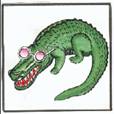
The bespectacled crocodile
by John Hall
An illustrated manual for facilitating Holistic Management in pastoral communities.
TABLE of CONTENTS: Annexes
1. Holistic management in pictures
2. Instructional format of the modules
3. Graphic support material for the modules
6. Suggested implementation scenarios
| The bespectacled crocodileby John HallAn illustrated manual for facilitating Holistic Management in pastoral communities. |
Some rights reserved. You may copy and distribute this manual or parts of it if you (1) credit the original authors, (2) include this notice, including the copyright license information below, and (3) on partial copies, include the following link where people may download the complete manual. English and French versions are available at
http://managingwholes.com/crocodile/
You may create and distribute derivative works, adaptations, and translations under the same conditions. If possible, please make an electronic copy available for public distribution (you can do this through ManagingWholes.com), and send the URL to the author:
If you wish to use this manual for commercial purposes, please contact the author.
Creative Commons license:
http://creativecommons.org/licenses/by-nc-sa/1.0/

|
|
ANNEX # 1 |
||||||
|
|
|
|
|||||
|
|
|
|
|
|
|
||
|
|
|
|
||||
|
|
|
|
|
|
||
|
|
|
|
|||||
|
|
|
|
|
|
|
||
|
|
|
|
||||
|
|
|
|
|
|
|
|
|
|
|
|
|||||
|
|
|
|
|
|
|
||
|
|
|
|
||||
|
|
|
|
|
|
|
|
|
|
|
|
|||||
|
|
|
|
|
|
|
||
|
|
|
|
||||
|
|
|
|
|
|
||
|
|
|
|
|||||
|
|
|
|
|
|
|
||
|
Module |
Summary of pedagogical objectives (i.e., participants shall be able …) |
Summary of activities |
|
|
Instructional Unit: Outreach (4 modules; duration: 6 to 7 hours)
|
|||
|
1. |
Trust building (2 hrs.) |
· To express oneself freely; to feel at ease and participate |
· Customary greetings, · introductions; · Informal discussion with unserialized posters
|
|
2. |
The whole to be managed (45 min.) |
· To describe the resources and their users, and explain why all the latter must be involved |
· Illustration of the whole to be managed; ·
participants
create a map of their village |
|
3. |
Community organization (2-3 hrs.) |
· To design appropriate forms of community organization |
· Inventory of forms of organization and of roles performed within the community; ·
Analysis of
roles and responsibilities to be assumed |
|
4 |
Conflict prevention (30 min.) |
To develop conflict prevention and resolution strategies |
· Lead-in exercise on exclusion vs. inclusion, to demonstrate the importance of the concept; · Brainstorming sessions on potential conflicts; · Use of story with a gap to help in delineating a prevention strategy.
|
Instructional Unit: Holistic goal (3 modules; duration: 3 hours)
|
|||
|
5 |
Quality of life (1 hr.) |
· To make a distinction between quality of life and the means of achieving it; · To explain the various ways of attaining the same goal
|
· Demonstration: the 3 stones of the hearth as a symbol of the 3 components of the goal ·
Participants
express the village’s “hopes and dreams” by using the unserialized posters
(holistic goal) |
|
6 |
Production (1 hr.) |
· To explain the importance of all production activities taken as a whole; · To explain how new activities envisioned can enable people to achieve a certain quality of life.
|
· Brainstorming session (with unserialized posters) on production activities compatible with the quality of life expressed by the community; |
|
7 |
Landscape (1 hr.) |
· To explain how it is possible to restore the environment; · To describe the future landscape |
· Introduction, using an open-ended story, to the idea that the environment can be improved; · Brainstorming session (with unserialized posters) on the future landscape envisaged by the community
|
|
Instructional Unit: Ecosystem’s building blocks (4 modules; duration: 3 to 4 hours)
|
|||
|
8 |
Water cycle (1 hr.) |
· To explain the water cycle; · To explain the relationship between “effective” water, soil caping, and percolation |
· Demonstration: the four pillars of a house as an introduction to this unit; · Participants create a concrete representation of the water cycle using the unserialized posters; ·
Demonstration
of compacted vs. loosened soils |
|
9 |
Nutrient cycle (1 hr.) |
· To explain the nutrient cycle · To explain the relationship between soil fertility and the nutrient cycle; |
· Participants establish a concrete representation of the nutrient cycle using the unserialized posters;
|
|
10 |
Energy flow (30 min.) |
· To explain the role of soil, water and sun in forage production |
· Participants establish a concrete representation of energy flow using the unserialized posters;
|
|
11 |
Succession (1 hr.) |
· To explain the relationship between succession and biodiversity · To explain the relationship between biodiversity and stability; |
· Exercise to establish a ladder of succession using unserialized posters; · Brainstorming session on vanished plant and animal species; ·
Discussion
of relationship between succession, biodiversity and stability; |
|
Instructional Unit: Tools (5 modules; duration: 4 to 5 hours)
|
|||
|
12 |
Animal impact (45 min.) |
· To explain the potencially positive impact of livestock on soil crust and vegetation ·
To explain
how animal impact is a tool that can be chosen like any other
|
· Introduction to the concept of animal impact by means of a series of images (e.g., stampeding herd); · Discussion of the relationship between animal impact and building blocks of the ecosystem |
|
13 |
Grazing and rest (1 hr.) |
·
To explain
the positive impact of rational grazing upon vegetation |
·
Analysis of
3 series of images: differences between overgrazing, rational grazing and
prolonged rest. |
|
14 |
Time (1 hr.) |
· To explain the effect of controlling time on pasture regeneration; · To explain the consequences of a failure to control time |
· (Introduction of the instructional unit (daba, scythe, axe, etc.) · Story/anecdote to introduce the concept of time; · Analysis of 2 series of images to point up notions of resting time and the dangers of continuous grazing; · Concluding role-play.
|
|
15 |
Fire (1 hr.) |
· To explain the positive or negative impact of fire, depending on the circumstances; ·
To explain
how fire is a tool that can be chosen like any other |
· To be established at a later date; |
|
16 |
Technologies (1 hr.) |
· To explain the difference between technologies and other tools discussed in this unit |
· Brainstorming session on the best-known technologies; ·
Exercise
comparing technologies with other tools |
|
Instructional Unit: Testing guidelines (7 modules; 5 hours)
|
|||
|
17 |
Weak link (1 hr.) |
· To explain that the ecosystem functions like a chain with interconnected links; ·
Identification
and strengthening of the weakest link. |
· Introduction to the unit through presentation of the “filter” · Explanation of the game · “Weak Link” game · Utilization of results |
|
18
|
Cause and effect (30 min.) |
· To distinguish the cause from its effects.
|
·
Card game:
participants must distinguish for a given issue, its cause from its effect |
|
19 |
Ecosystem as a whole (30 min.) |
· To explain the possible impact of decisions upon the ecosystem, and why it must be taken into consideration |
·
Game about
impact on the ecosystem: the “candidate tools” must go before a “jury” made
up of building blocks of the ecosystem before they can be accepted. |
|
20 |
Additional resources (30 min.) |
· To explain the idea of additional resources; · To identify the optimal allocation in view of a given objective; |
·
Investment
game: players can “invest” (with play money) in the tool they think will have
the maximum yield in view of the goal being pursued. |
|
21 |
External dependence (45 min.) |
· To evaluate their own capacity to ensure the sustainability of investments
|
· Game: brainstorming session and comparison of resources needed for two different technologies
|
|
22 |
Society and culture (45 min.) |
·
To evaluate
the acceptability of a given action for the various human groups both within
and outside of the community |
· Role-playing in which participants identify and discuss the importance of the test |
|
23 |
Synthesis of tests (1 hr.) |
· To explain why tools must be tested; ·
To use the
battery of 6 tests; |
· Participants review in turn several tools using the pocket chart; |
|
Instructional Unit: Management principles (5 modules; 4 to 5 hours)
|
|||
|
24 |
Plants to be promoted (1 hr.) |
· To choose forrage plants the development of which would improve the quality of grazing lands
|
· Introduction to the instructional unit: the bricks used to build the wall; · Brainstorming session on potential plants, followed by a brainstorming session on selection criteria · Choice of plants to be promoted, using a pocket chart |
|
25 |
mRT: minimum resting time (1 hr.) |
· To determine the mRT (in rainy and dry seasons) of plants that herders want to rehabilitate |
· Series of images to outline the mRT concept; ·
Discussion
and determination by the group of mRTs of plants to be promoted |
|
26 |
MGT: maximum grazing time (45 min.) |
· To determine the MGT (in rainy and dry seasons) of plants that the population wants to rehabilitate |
· Series of images to outline the MGT concept; ·
Discussion
and determination by the group of MGTs for plants to be promoted |
|
27 |
Overgrazing (1 hr.) |
·
To explain
the relationship between adherence to the mRTs and MGTs of plants to be
rehabilitated and the process of overgrazing |
· Game using candy to introduce the concept of selection; · Open-ended story (illustrated) and discussion to develop the concept of overgrazing |
|
28 |
mRT, MGT and division into paddocks (1 hr.) |
· To determine the number of paddocks needed in order to adhere to the mRTs and MGTs of species to be promoted |
· Interactive presentation of the idea of dividing grazing land into paddocks; ·
2 practical
exercises: one concrete example and one based on species to be promoted |
Instructional Unit: Planing of grazing (4 modules; 4 to 5 hours)
|
|||
|
29 |
Range-land mapping (90 min.) |
· To divide the grazing area into paddocks, indicate the boundaries of these paddocks, and identify them by assigning names to them. |
· Presentation of the instructional unit: hand, ballpoint pen and notebook · Production of the map 1) in the dirt and 2) on paper; · Discussion of markers, division of site into paddocks and naming of paddocks ·
Walk-through
of paddocks, followed by a discussion of how to go about creating them. |
|
30 |
Relative value of paddocks (1 hr.) |
· To gauge the relative value of each paddock and program livestock movements |
· Brainstorming session on factors determining relative value · Valuation of the paddocks by placing pebbles on the map ·
Discussion:
duration of stay on the parcels |
|
31 |
Events and constraints (1 hr.) |
· To identify events and constraints to be taken into account in planning; ·
To define
strategies and find solutions |
· Brainstorming session on events · Creation of a calendar · Study of constraints encountered and development of appropriate strategies
|
|
32 |
Finalization of the manage-ment plan (1 hr.) |
· To finalize an acceptable and implementable grazing plan |
· Determination of livestock movements ·
Creation of
a “snake calendar" on the map of the grazing area |
Instructional Unit: Herd management (3 modules; 3 hours)
|
|||
|
33 |
Number of animals (45 min.) |
· To explain the potentially positive impact of a large number of animals; · To assess the capacity of the grazing area to support outside users and design appropriate strategies |
· Introduction to the instructional unit: the herd moving in an “obligatory direction” · Critical incident exercise aimed at clarifying the notion that a large number of animals can have a positive impact.
|
|
34 |
Moving herds between paddocks (1 hr.) |
· To establish the relationship between time management, division into paddocks and herd movements on the paddocks |
· Brainstorming session on the advantages and disadvantages of various herd driving methods; ·
Role-playing
aimed at examining the importance of community organization in adhering to
the plan |
|
35 |
(1 hr.) |
· To describe a system of improved herd guarding that would be set up by the community |
· Exercise with unserialized posters to identify actors, followed by classification of responsibilities to be assumed ·
Work in
sub-groups on factors to consider in assigning each party’s responsibilities |
Instructional Unit: Monitoring and re-planning (3 modules; 4 to 5 hours)
|
|||
|
36 |
Monitoring: choice of indicators (2 hours) |
· To identify measurable indicators relevant to landscape, production and quality of life |
· Introduction to the instructional unit: the "Observation Game" presenting the idea of monitoring · Process of monitoring and re-planning, with unserialized posters ·
Brainstorming
session with indicators and their allocation among the three parts of the
goal |
|
37 |
Monitoring: collection and analysis of results (2 hours) |
· To process the results of monitoring in such a way as to gauge whether the desired goal is getting closer or further away. |
· Pocket chart used to identify persons responsible for data collection, and frequency of this collection · Creation of the table of results (Monitoring table) ·
Practical
exercise: data analysis |
|
38 |
Re-planning (30’) |
·
To establish
a revised grazing plan that can be accepted and applied by all users |
· Critical incident exercise used to elucidate reasons for re-planning |
FOLDER # 0: LOGO FOR THE OUTREACH/TRAINING CYCLE
Icon (square image, 10x10 cm)
0001. Crocodile wearing eyeglasses
FOLDER # 1: TRUST BUILDING
Icons (square images, 10x10 cm)
Generic icon for community outreach
101. Palm of a hand
Icon: trust building
111. "happy face"
Unserialized posters (A4 format )
121. Cow in degraded grazing area
122. Conflict between herdsman and farmer
123. Woman milking a cow
124. Woman driving a flock of goats
125. Woman and child with nurse
126. Family eating a meal together
127. Woman chasing a cow out of her vegetable garden
128. Purchase of clothing for a child
129. Sale of a goat at the market
130. Nurse with patients
131. Representative of the administration visiting a village
132. Marriage
133. Brush fire
134. Extremely degraded landscape
FOLDER # 2: WHOLE TO BE MANAGED
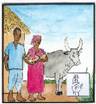
Icon (square image, 10x10 cm)
211. Whole to be managed: village, family and cow
Village map:
ü Bristol paper, 50x 65 cm.
ü Pencils and erasers
ü
Felt-tip markers
Postcards (1/2 A4 format)
Users
221. Conflict between farmer and herdsman
222. Man cutting down grass
223. Man felling a tree
224. Stripping bark from a tree (harmful cutting)
225. Forest completely leveled, tree trunks carried away by truck
226. Transhumant Moors (w/ camels)
227. Transhumant Peuhls (w/ distinctive hat)
228. Woman carrying wood
229. Woman drawing water from a well
230. Village meeting (on a mat) with outside visitors (wearing Peuhl hat).
Landscape: use
"ecological succession " module (Folder # 11, images 1121 through
1126)
Infrastructure
241. Mixed livestock herd
242. Vaccination crush
243. Mechanized well
244. Cistern trailer
245. Mill
246. Borehole
247. Farming equipment
248. Concrete houses (n.a.)
249.
Dispensary.
FOLDER # 3: COMMUNITY ORGANIZATION
Icon (square image, 10x10 cm)
311. Organization: two intertwined mechanisms
Unserialized posters (1/2 A4 format)
Decision-makers
321.Village chief
322.Farmer
323.Herder
324.Woman
325.Hunter
326.Fisherman
327.Wood-cutter
328.transhumant Moor
329.civil servant
330.girl
331.boy
332.auxiliary (villager holding a notebook);
333.trader
334.notable personage
Tasks to be performed
341. herdsmen talking amongst themselves
342. herdsman talking to a farmer
343. herdsman talking to a transhumant herder
344. herdsman going out to meet a transhumant herd
345. discussions under a tree
346. training session
347. group leaning over a grazing area map (n.a.)
348. guarding the herd in the grazing area
349. watering the herd
350. young person with notebook using a tape measure (n.a.)
351. person handling money (n.a.)
352. protection of a cultivated parcel (n.a.)
353. vaccination of livestock.
Venn diagram
ü Bristol paper, 50x65 cm.
ü Felt-tip markers.
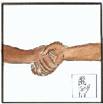
FOLDER # 4: CONFLICT PREVENTION
Icons (square images, 10x10 cm)
411. Conflict prevention icon: a handshake
Cards indicating reasons for conflict (represented by lightning bolt). 10 x 10 cm format.
421. Crops
422. Trees
423. Stock watering (well)
424. Grazing
425. Crowding/mixing of personal property in the village
426. Brush fire
427. Sick animal
FOLDER # 5: QUALITY OF LIFE
Icons (square images, 10 x 10 cm)
Generic icon: the Goal
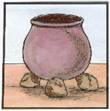
501. Pot resting on three stones of a hearth
Specific icon: quality of life
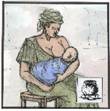
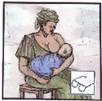
511. Woman (from waist up) holding a baby
Unserialized posters
(3 identical stacks, 1/2 A4
format)
Goods and services
521. Entrance to a mosque
522. television
523. radio
524. refrigerator
525. bicycle
526. jewelry
527. running water (faucet)
528. well water
529. borehole
530. electricity
Activities and status
541. Religion: reading the Koran
542. Schooling
543. Adult literacy training
544. Continuing living in the village
545. Becoming a soccer player
546. Having access to a maternity clinic
547. Joining the military or the police force
548. Becoming a civil servant
549. Going to live in the city
550. Having a large family and staying in the village
FOLDER # 6: PRODUCTION
Icons (square images, 10 x 10 cm)
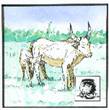
611. Production icon: cow with calf
Unserialized posters (1/2 A4 format)
621. Farmer: peasant hoeing his field
622. Herder: mixed herd
623. Fisherman in boat with net
624. Hunter with rifle and game
625. Farmer sowing seed
626. Merchant in front of his store
627. Wood-cutter felling a tree
628. Handicrafts: women making mats
629. Weaver
630. Raising small animals: poultry and rabbits
631. Grain mill (with miller)
632. Small commerce (women selling vegetables at the market)
633. Woman working in her market garden
634. Woman milking
635. Woman making cheese
636. Tailor
637. Woman picking fruit in an orchard
FOLDER # 7: LANDSCAPE
Icons (square images, 10x10 cm)
711. Icon for landscape goal: luxuriant vegetation
Posters for story with a gap: (double A4 format)
721.Poster of Ndourndour in degraded condition
722.Poster of Ndourndour in rehabilited condition
Assorted images (1/2 A4 format)
Flora (vegetation)
731.Very large cultivated field
732.Banks of a river
733.Extremely lush underbrush
734.Pond
735.Cultivated hills
736.Village
in the middle of the forest
Fauna (wildlife)
741. Deer
742. Wild boar
743. Monkey
744. Pelican
745. Hyena
746.
Hare
FOLDER # 8 WATER CYCLE
Icons (square images , 10x10 cm)
Generic icon of the Ecosystem's building blocks
801.The four pillars of a traditional dwelling
Specific icon: Water cycle
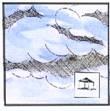
811. Gray cloud in blue sky
Images for semi-structured exercise (1/2 A4 format)
821. Cloud without rain
822. Cloud with rain
823. Percolation into cultivated field
824. Torrential runoff
825. Evaporation from a pond, forest
826. 5 arrows, 16 cm long.
FOLDER # 9. NUTRIENT CYCLE
Icon (square images, 10 x 10 cm)
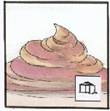
911. nutrient cycle icon: cow manure on the ground
Images for semi-structured exercise (1/2 A4 format)
921. Cow excreting manure
922. Cow nibbling grass
923. Fodder plants
924. 3 arrows, 16 cm long
Consolidation (images in 1/2 A4 format)
931. plant litter (crushed grass) on the ground
932. termite hill
933. representation of nutrient cycle
FOLDER # 10: ENERGY FLOW
Icon (square images, 10x10 cm)
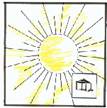
1011. Energy flow icon: sun shining
Demonstration by facilitators: (Images in 1/2 A4 format)
1021. Sun
1022. Vegetation
1023. Arrow
FOLDER # 11: ECOLOGICAL SUCCESSION
Icon (square images, 10x10 cm)
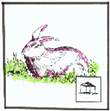
1111. Succession icon: stylized rabbit
Unserialized posters (1/2 A4 format)
Degradation: (representation of various stages of degradation)
1121. Desert landscape
1122. Landscape invaded by sand dunes
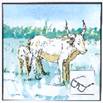
1123. Emaciated cow in desert landscape
1124. Erosion in a stony creek bed
1125. Landscape consisting of tree stumps
1126. Landscape that appears to be regaining its plant cover
Restoration (process of restoration: use images from “future landscape” module: folder # 7)
Tallying vanished species
ü About forty half sheets (cut the long way) of colored A4 paper);
FOLDER # 12: ANIMAL IMPACT
Icons (square images, 10x10 cm)
Generic icon for tools
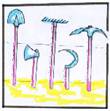
1201. Farming implements (plow, axe, scythe) hanging on a wall
Specific icon: animal impact
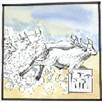
1211. Cattle running in a cloud of dust.
Structured exercise: (2 series of 4 images, A4 format)
“Without impact” series (landscape with identical house in all four images)
1221. Dry season: average vegetation, a few motionless animals
1222. Dry season: reduced vegetation, same motionless animals
1223. Dry season: vegetation has completely disappeared, and the same animals are still there
1224. Rainy season (green grass): moderate vegetation, same animals
“With impact” series (landscape with identical tree in all four images)
1231. Dry season: large stampeding herd, followed by a herdsman and raising a cloud of dust;
1232. Ground after the animals’ violent passage: plants are trampled, ground is strewn with clods of earth, no animals
1233. vegetation has recovered after the animals’ passage: animals are no longer there, but it appears that the rainy season is approaching;
1234. Rainy season: animals graze on a luxuriant pasture.
FOLDER #13: GRAZING AND REST
Specific icon: Grazing (square images, 10x10 cm)
1311. Cow about to nibble a plant
Illustrated sequences (3 sequences of 6 images each, 10.5 x 25 accordion format)
|
|
grasses |
calotropus |
|
1321. Overgrazing 1322. Overgrazing 1323. Overgrazing 1324. Overgrazing 1325. Overgrazing 1326.
Overgrazing |
Initially normal Grows weaker Grows weaker Grows weaker Grows weaker Disappears |
Initially under control Spreading Spreading Spreading Spreading Has invaded everything |
|
1331. Normal grazing 1332. Normal grazing 1333. Normal grazing 1334. Normal grazing 1335. Normal grazing 1336.
Normal
grazing |
Initially normal Stays the same/spreads Stays the same/spreads Stays the same/spreads Stays the same/spreads Stays the same/spreads |
Initially under control Remains under control Remains under control Remains under control Remains under control Remains under control |
|
1341. Long rest 1342. Long rest 1343. Long rest 1344. Long rest 1345. Long rest 1346.
Long rest |
Initially normal Initial growth spurt Stabilizes Declines Degenerates into a crown Disappears |
Initially under control Initial growth spurt Grows more dominant Grows more dominant Grows more dominant Is the only survivor |
FOLDER # 14: TIME
Icon (square images, 10x10 cm)
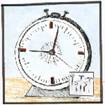
1411. Time : alarm clock
Sequential posters (accordion posters)
Process of degradation: (6 images 11x25 cm)
1421. Cow is present: plant is flourishing
1422. Cow is present: plant has been grazed
1423. Cow is present: plant has been heavily grazed
1424. Cow is present: plant has been very heavily grazed
1425. Cow is present: plant is disappearing
1426. Cow is present: plant has completely disappeared.
Rational use (10 images, 11x30 cm)
1431. Without cow: plant flourishing
1432. With cow: plant starts to be grazed
1433. With cow: plant is grazed a bit more
1434. Without cow: plant is in condition in which cow left it
1435. Without cow: plant develops once again
1436. Without cow: plant continues to develop
1437. Without cow: plant has regained size it had in # 1431
1438. With cow: repeat of image # 1432
1439. With cow: repeat of image # 1433
1440. Without cow: repeat of image # 1434
FOLDER # 15: FIRE
Icon (square image, 10x10 cm)
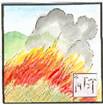
1511. Brush fire
FOLDER # 16 TECHNOLOGIES
Specific icon: Technologies (square image, 10x10 cm)
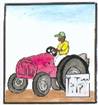
1611. Tractor with driver
Tool reminder icons
1621. Animal impact (# 1211)
1622. grazing (# 1311)
1623. time (# 1411)
1624. fire (# 1511)
Unserialized posters (horizontal, 1/2 A4)
Structures
1631. barbed wire
1632. ravine correction
1633. shelter for livestock
1634. wells and watering troughs
Equipment
1641. sprayer
1642. trailer
1643. plow
1644. mill
Inputs
1651. improved seed
1652. veterinary drugs
1653. feed concentrate
1654. saplings from nurseries
Agricultural work
1661. clearing
1662. irrigation
1663. top dressing of crops
1664. fodder harvesting
FOLDER # 17 WEAK LINK
Icons (square images, 10x10 cm)
Generic icon: Testing guidelines
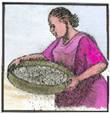
1701. Woman shaking a sieve
Icon: weak link
1711. A few links of a chain
“Weak link” game (2 sets of 4 Bristol cards, 15x21 cm) showing symbols of the four building blocks of the ecosystem, attached by a loop of string that players slip over their arms.)
Building blocks of the ecosystem
1721. Icon for water cycle (# 811)
1722. Icon for nutrient cycle (# 911)
1723. Icon for energy flows (# 1011)
1724. Icon for succession (# 1111)
Solar chain
1731. sun + plant
1732. plant + animal
1721. animal + paper money
FOLDER # 18. CAUSE AND EFFECT
Icons (square images, 10x10 cm)
1811. Cause and effect icon: hammer
Unserialized posters: What is to be done? (postcard size images, 15-21 cm)
1821. Man being hit with hammer
1822. Nurse
1823. Aspirin
1824. Glass of water
1825. Package of band aids
1826. Three characters shown (from the waist up): the one delivering the blows, the one receiving the blows and the third person who intervenes to stop the blows.
FOLDER # 19: ECOSYSTEM AS A WHOLE
Icon (square image, 10x10 cm)
1911. Ecosystem icon: 4 pillars of a traditional dwelling (# 801)
Pocket chart:
ü Flip chart
ü 6 envelopes 18x24 cm
ü about fifty pieces of paper (business card size) for the vote
Icons of tests (square images, 10x10 cm) (for modules 8-11)
1921. icon for water cycle (# 811)
1922. icon for nutrient cycle (# 911)
1923. icon for energy flows (# 1011)
1924. icon for succession (# 1111)
FOLDER # 20: ADDITIONAL RESOURCES
Icon (square images,10x10 cm)
2011. Icon for additional resources: a few pieces of paper money
Pocket chart:
ü Plywood panel
ü 6-8 envelopes, 18x24 cm, to be affixed to the panel
ü About 50 "ballots”, business card size, preferably colored paper
Illustrations in the pocket chart (playing card size, 10.5x15 cm);
2021. Mixed herd (cattle, small ruminants, donkey)
2022. vaccination (drugs and syringe in foreground)
2023. jewelry
2024. bale of hay
2025. sacks of grain
2026. bicycle
2027. cart (without animal)
2028. farming implements: shovel, pickaxe, etc.
2029. concrete houses
2030. paper money
FOLDER # 21: EXTERNAL DEPENDENCE
Icon (square images, 10 x 10 cm)
2111. External dependence: donkey in foreground with truck in background
Brainstorming
Presentation of the subject (images,1/2 A4 format)
2121. New truck
2122. Donkey harnessed to a cart
Unserialized posters: illustration of brainstorming (images, 1/2 A4 format)
2131. Bale of hay
2132. Bucket of water
2133. Driver
2134. Can of oil
2135. Jerrican
2136. Insurance card
2137. Vehicle registration
2138. tire
2139. tool kit
FOLDER # 22. SOCIETY AND CULTURE
Icon (square images, 10x10 cm)
2211. Society and culture icon: village meeting under a tree
Maxi-flans: (silhouettes on 50x65 cm Bristol cards), or postcards (1/2 A4 format)
2221. Village chief
2222. His son
2223. Transhumant herdsman
2224. Technician
2225. District commander
FOLDER # 23: SYNTHESIS OF TESTS
Specific icon:
2311. Repetition of generic icon for test criteria: the sieve (# 1701)
Pocket chart
ü plywood panel
ü 6-8 envelopes, 18x24 cm, to be affixed to the panel
ü About 50 “ballots”, business card size, preferably of colored paper.
Icons of the 6 tests
2321. chain: weak link (# 1711)
2322. hammer: cause and effect (# 1811)
2323. 4 pillars of the house: ecosystem as a whole (# 1911)
2324. bank notes: additional resources (# 2011)
2325. donkey and truck: external dependence (# 2111)
2326. meeting under a tree: society and culture (# 2211)
FOLDER # 24 CHOICE OF PLANTS TO BE PROMOTED
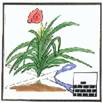
Generic icon Management principles
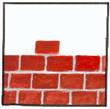
2401. a few bricks in a wall
Specific icon: identification of species
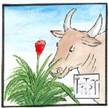
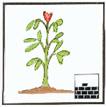
2411. plant with red flower
Icons for table of folders (10 x 10 cm cards)
Ø Various types of plants
2421. Grass
2422. Legume
2423. Creeping plant
2424. Succulent plant
2425. Shrub
2426. Tree
Ø Selection criteria
2431. Good nutritional quality for animals (small ruminants)
2432. Persists outside the rainy season (representation of the two seasons)
2433. Drought-resistant (sun)
2434. Produces abundantly (plant on grocer’s scale)
2435. Also used by people (plant being picked by a women)
2436. Resists erosion (plant in a dried-out stream bed)
FOLDER # 25: MINIMUM RESTING TIME
Icons : Specific icon: mRT (square images, 10 x 10 cm)
2511. Plant with alarm clock in foreground
Sequence of illustration: use the 10 sequential images in accordion format,from the “time” module # 1431 through 1440;
FOLDER # 26: MAXIMUM GRAZING TIME
Specific icon: MGT (square images, 10 x 10 cm)
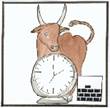
2611. Cow with alarm clock in foreground
Sequence of illustrations: use the same sequence of 10 images in accordion format from the “time” module #1431 through 1440, “ also used for the previous module.
FOLDER # 27: OVERGRAZING
Specific icon: Overgrazing (square images, 10 x 10 cm)
2711. Plant being cut off at the base with scissors
FOLDER # 28: mRT, MGT, AND DIVISION INTO PADDOCKS
Specific icon: Division into paddocks (principles) (square images, 10 x 10 cm)
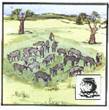
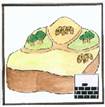
2811. Image of village grazing lands
FOLDER # 29: RANGE-LAND MAPPING
Icons (square images, 10 x 10 cm)
Generic icon: Programming
2901. Hand writing with a pen in a notebook
Specific icon: dividing the grazing area into paddocks
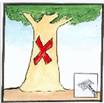
2911. Icon for paddock creation: tree trunk marked with red paint
Illustrative labels for village lands map (square images, 5x5 cm)
2921. Crops
2922. Well
2923. Village
2924. Mosque
2925. Isolated house
2926. Health post
2927. Sand dunes
FOLDER # 30: RELATIVE VALUE OF PADDOCKS
Specific icon: overall capacity (square images, 10 x 10 cm)
3011. Handful of grass on a scale
FOLDER # 31: EVENTS AND CONSTRAINTS
Specific icon: seasonal events (square images, 10 x 10 cm)
3111. Landscape with rain on the left side and sun on the right side
Labels to be affixed to the grazing management plan (5x5 cm)
3121. Poisonous plant
3122. crops
3123. dried-up pond
3124. flooded parcel
3125. brush fire
3126. fly/ parasite
3127. milking of a cow
3128. calf suckling
3129. predators (jackal)
3130. harvest residues
3131. well (dried up)
3132. vaccination (syringe)
3133. arrival of transhumant herders
3134. cutting fodder with a scythe
3135. puffy cloud
3136. sun: excessive temperature (n.a.)
3137. conflicts
3138. felling of trees
3139. monitoring
3140. stock watering
FOLDER # 32: FINALIZATION OF THE GRAZING PLAN
Specific icon: grazing plan (square images, 10 x 10 cm)
3211. village lands image (# 2811), but with alarm clock in foreground
FOLDER # 33: NUMBER OF ANIMALS
Icons (square images, 10 x 10 cm)
Generic icon: Driving livestock
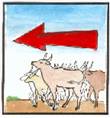
3301. Herd moving in the direction of a large red arrow
Specific icon: Number of animals
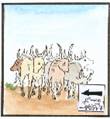
3311. Group of cattle crowded together
Icons for modules studied previously
3321. Whole to be managed (# 0211)
3322. Animal impact (# 1211)
3323. Time (# 1411)
3324. Events and constraints (# 3111)
Mini posters A4 format. (illustration of story)
3331. men quarreling
3332. discussion in the village
3333. arrival of administrative official
3334. discussion at the well
3335. watering of livestock
3336. man wearing djellaba
FOLDER # 34: MOVING HERDS BETWEEN PADDOCKS
Specific icon (square images, 10 x 10 cm)
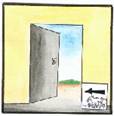
3411. View of landscape through the door of a house
Posters: the various ways of proceeding (posters, format A4)
3421. Five small herds moving about separately
3422. Livestock grouped into three medium-sized herds
3423. All animals grouped into a single herd.
Reasons for reluctance to group herds (1/2 A4 format)
3431. Risk of contagion from sick animals
3432. Animals fight (n.a.)
3433. Watering takes too much time (n.a.)
3434. Animals get mixed up (n.a.)
3435. Animals are more difficult to supervise (n.a.)
FOLDER # 35: SUPERVISING THE HERD
Specific icon: guarding: (square images, 10 x 10 cm)
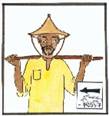
3511. Herdsman with turban and staff
Unserialized posters (horizontal 1/2 A4 format)
Ø Images illustrating need for guarding
3521. Cow grazing in cultivated field
3522. Cow wandering among houses (n.a.)
3523. Herd being watered (n.a.)
3524. Cow with calf, being milked near a house
3525. Large herd on the move under the control of a herdsman
3526. Fenced-in field, with animals outside (n.a.)
3527. Large transhumant herd appearing on the horizon (n.a.)
3528. One cow alone in the middle of the grazing area, with the rest of the herd at a distance
3529. Cow tearing the thatch off the roof of a house
3530. Sick cow amidst other healthy animals (n.a.)
3531. Cow peering into a well from which women are drawing water
3532. Ill-tempered bull chasing village children
Ø Representations of people who can perform guarding tasks
3541. Herdsman (supervising the herd icon)
3542. Auxiliary: young person with notebook (n.a.)
3543. Supervision committee: group of men (n.a.)
3544. Women with cattle switches
3545. Children with cattle switches
3546. Old people with cattle switches
3547. Farmer (with his daba on his shoulder)
3548. Hunter with his rifle
FOLDER # 36: MONITORING: CHOICE OF INDICATORS
Icons (square images, 10 x 10 cm)
Generic icon: Monitoring and re-planning
3601. Pair of eyeglasses
Specific icon: Monitoring: choice of indicators
3611. ‘holistic goal’ icon (# 501) with ‘monitoring’ inset
Icon illustrative "the model in pictures"
3621. Quality of life goal (# 0511) with ‘monitoring’ inset
3622. Production goal (# 0611) with ‘monitoring’ inset
3623. Landscape goal (# 0711) with ‘monitoring’ inset
Production indicators (square images, 10x10 cm)
3631. Milk production
3632. Production of young animals (calves, lambs)
3633. Sale of livestock
3634. Distribution of supplementary feed
3635. Grain production
3636. Sale of vegetables
Landscape/environment indicators (square images, 10x10 cm)
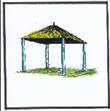
3641. plant diversity
3642. Rainfall
3643. Water erosion
3644. Wind erosion
3645. Rodents
3646. Flies/ parasites
FOLDER # 37: MONITORING: DATA COLLECTION & ANALYSIS
Specific icon: Monitoring : collection and analysis of results (square images, 10 x 10 cm)
3711. Holistic goal icon, with “monitoring” inset (like # 3611)
Cards portraying people responsible for monitoring (10x10 cm format)
3721. Auxiliary
3722. Extension worker
3723. Village chief
3724. Head of household
3725. Management committee (n.a.)
3726. Representative of the administration
3727. Herdsman
3728. Villager
3729. Village girl
3730. Village boys
Representation of
the “Holistic model in pictures”
Since the two participatory monitoring modules – “choice of indicators” and “data collection & analysis” – deal simultaneously with goals of landscape, production and quality of life, monitoring will be symbolized, on the “holistic model in pictures”, by the icons for these elements of the holistic goal, with the “monitoring” inset in the lower right-hand corner.
FOLDER # 38: RE-PLANNING
Specific icon: Re-planning (square images, 10 x 10 cm)
3811. Repetition of the icon symbolizing the finalization of the grazing plan;
Plan/monitoring/oversight/re-planning cycle (1/2 A4 ladscape format)
3821. Transhumants arriving
3822. Group discussing over tea
3823. Management committee looking at the grazing plan
3824. “Conflict prevention” icon (# 0411)
3825. “Finalization of the grazing plan” icon (# 3211)
3826. “Participatory monitoring” icon (# 3611)
3827. Four arrows
|
|
QUALITY OF LIFE |
Category |
Indicator |
Social cohesion |
ü Frequency of conflicts ü Decision-making by consensus ü Organization of visits between villages ü Participation of all sub-groups in the community
|
Women’s participation |
ü Management plans take women’s needs into account ü Women represented on Management Committee ü Participation of women in decision-making
|
Access to basic services |
ü Existence of a dispensary/ health post ü Pharmacy ü School ü Adult literacy center ü Mosque ü Koranic school
|
Housing |
ü Type of construction material used for dwellings ü Availability of community buildings
|
Water supply |
ü Proximity ü Quality ü Availability / permanence
|
Stability of population |
ü Displacement of families (time spent in one place) ü Transhumance of livestock
|
Personal well-being |
ü Clothing purchases ü Personal hygiene ü Consumption of tea and other “luxury” items
|
|
|
PRODUCTION |
Category |
Indicator |
Livestock |
ü Quantity of milk produced (estimate; trend) ü Marketing of milk (estimate; trend) ü Duration of lactation (in months) ü Calving (annual rate) ü Age at first calving ü Herd growth ü Sale (number of head) ü Mortality (esp. of young animals) ü Condition of livestock at the end of the dry season ü Distribution of supplemental feed during the dry season
|
Agriculture |
ü Crop yields ü Fodder harvest ü Cultivated area ü Crop diversity ü Yield of picking/gathering (e.g. of gum arabic) ü Frequency of damage caused by livestock
|
Handicrafts, trade |
ü Production of articles (trend) ü Participation in weekly markets (trend)
|
|
|
LANDSCAPE |
Category |
Indicator |
|
Vegetation
|
ü MGT (module # 26): number of days; trend ü mRT (module # 25) no. of days; trend ü Relative quality of paddocks (module #30) ü Density of vegetation (estimate; trend) ü Number of species (trend) ü Present of perennials, plants to be promoted (module # 24) ü Rate of ground coverage ü Spread of inedible plants (yes/no); numbers ü
Emergence of poisonous plants
(yes/no); numbers; |
Erosion |
ü Exposed roots (rate) ü
Ravines (number, depth) |
Water
|
ü Capacity of ponds (estimate; trend) ü Amount of time ponds last (estimate; trend) ü
Depth of wells: water table
(estimate; trend) |
Fauna
|
ü Insects (presence of specific species; density) ü Small rodents/mammals (idem) ü Game animals (idem) ü Predators (idem)
|
Soils |
ü Denuded spots (rate) ü Crust (hardpan) (rate) ü Dunes (presence; area) ü Plant litter (rate of coverage) |
Other |
ü Incidence of harmful cutting (number) ü Brush fires (frequency)
|
In preparing a training session, it is critical that the facilitator be in agreement with the relevant communities on the local-language equivalents for the terms most commonly used in presenting the holistic model.
The following list is, of course, not restrictive. Future users of the manual are urged to fill it out on an as-needed basis, but always with the community involved.
|
English |
|
|
|
Annuals (plants) Brush fire Cause Conflict Cycle (of water, nutrients) Degradation Delimitation (of paddocks) Ecosystem Effect Energy flow Environment Erosion Farmer Feed Goal (of the community) Grass Grazing (time) Grouping together (of livestock) Health Holistic (e.g., management) Landscape Litter (from plants) Manure Module (training) Monitoring-evaluation Nutrients (mineral, organic) Image (i.e., picture) impact (animal) Iterativity Overgrazing Paddock (of grazing land) Percolation Perennials (plants) Planning; Programming Quality of life Range-land Reproduction Resting (time) Run-off (of water) Shepherd/herder Shrubs Succession (ecological) Sustainability Symbol Transhumant Watering (of livestock) Weak link/limiting factor Etc…
|
|
|
To follow, the outreach team is invited to consider some strategies that might be envisaged in implementing the outreach cycle with the target communities.
Assuming that it takes about 40 hours to go through all 38 modules that make up the cycle, three possible scenarios are envisaged:
First approach : An intensive "crash course"
(a single community at a time; extremely intense)
|
Hours/day |
Days/week |
Hours/week |
Duration (in weeks) |
Total hours |
|
6 |
7 |
42 |
1 |
42 |
Second approach: semi-intensive, associative
(simultaneous training of two neighboring communities)
May be more realistic,
|
Hours/day |
Days/week |
Hours/week |
Duration (in weeks) |
Total hours |
|
3 1/2 |
4 |
14 |
3 |
42 |
Third approach: extensive, and also associative
(simultaneous training of up to three neighboring communities).
Disadvantage: it is difficult to maintain the continuity of the teaching process
|
Hours/day |
Days/week |
Hours/week |
Duration (in weeks) |
Total hours |
|
3 |
2 |
6 |
7 |
42 |